Slide View

On Searching for Library Standards that Align with Library Values

phette.net/c4l26

code{4}lib 2026
March 2, 2026
Philadelphia, PA

Eric Phetteplace
Systems Librarian
California College of the Arts

<?xml version="1.0" encoding="UTF-8"?>
<metadata>
  <standard authority="???" values="???">
    What lurks behind yond name URI?
  </standard>
</metadata>
@phette23@digipres.club phette23
1 / 18

Background & Motivation

  • Existing repository software (openEQUELLA) has dying support
  • I was building a new digital repository using InvenioRDM
  • Our existing IR metadata has controlled values but no URIs
  • Types: names (people, places, organizations), subjects, genres/forms
<mods>
    <subject authority="ulan" type="personal">
        <name>Ferlinghetti, Lawrence</name>
    </subject>
</mods>
2 / 18

Term Mapping: Take 1

  • InvenioRDM insists upon identifiers for subjects
  • Mapped most of our values to Library of Congress URIs (LCNAF, LCSH, LCGFT)
  • LC vocabs chosen due to their comprehensiveness & our familiarity
Metadata spreadsheet
Term mapping spreadsheet with colums "V Type", "VAULT value", "V auth", "New Label", "Auth", "Auth URI", and "Status". The sheet shows that terms were of various types (genre, topic, name), came from different sources (local, ULAN), sometimes had their text change ("Comic Memoir" to "Autobiographical comics"), were mapped to various LC vocabularies (LCGFT, LCSH, LCNAF), had LC URIs, and were all of status "done".
3 / 18

Gulf of Reason

  1. January 20, 2025: Restoring Names That Honor American Greatness EO 14172

  2. February 7: Secretary of the Interior directs Board on Geographic Names (BGN) to rename Gulf of Mexico

  3. February 13: Library of Congress issues Tentative Monthly List 12 LCSH 2

  4. February 18: Deadline for the useless comment period on LCSH changes*

  5. March 14: "America, Gulf of" enters LCSH

* See "D.3.a. The BGN decision" in LC's Subject Headings Manual: Formulating Geographic Headings H 690. "If the BGN decision has been obtained, favor it over any other name forms obtained from other sources."

4 / 18

Cataloging Values

"Gulf of America" is difficult to justify in terms of cataloging values. Consider a few principles from IFLA's "Statement of International Cataloguing Principles":

  • Convenience of the user
  • Common usage
  • Economy
  • Consistency and standardization
  • Interoperability
  • Rationality

See also: Cataloging Code of Ethics (ALA)

5 / 18

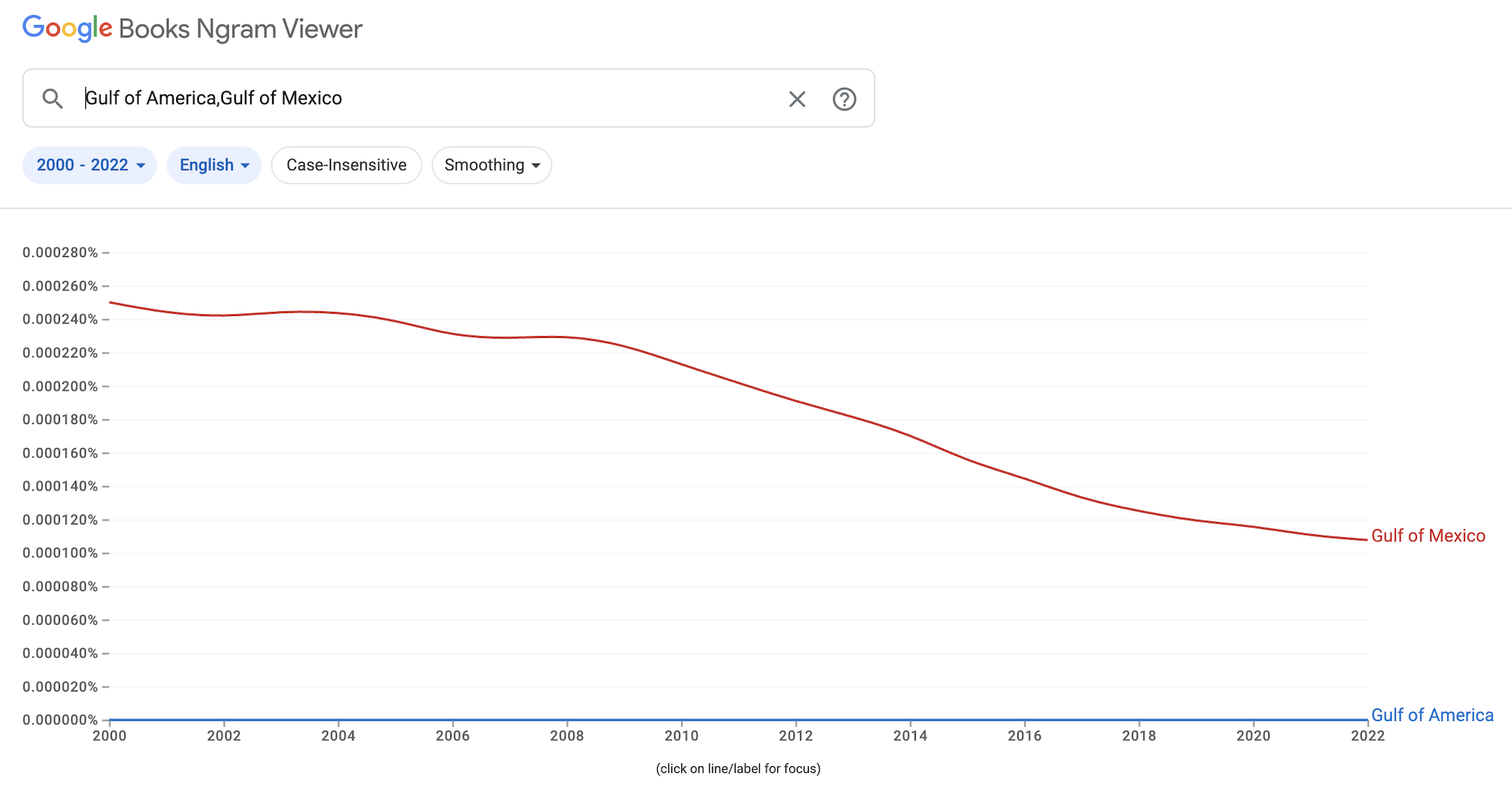
No One Uses This Term

Google Ngram viewer graphing the usage of Gulf of Mexico versus Gulf of America, showing virtually no usage of the latter term
6 / 18

Familiar Territory

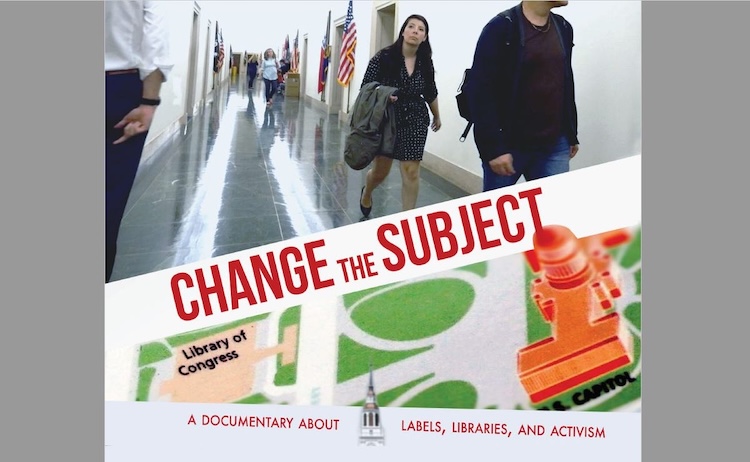
Congress has interfered with LCSH too, with H.R. 4926 Stopping Partisan Policy at the Library of Congress Act.

Cover of 'Change the Subject' documentary on the LCSH term change
7 / 18

Over-reliance on LC

Reliance on LC is, at root, reliance on the US federal government.
"While recognizing the value of a shared set of terminology, the PCC community’s commitment to DEI principles necessitates a broadening of the perspectives represented in our library catalogs. Libraries have successfully used alternative vocabularies in addition to LCSH for years, and we encourage PCC members to continue to use alternative vocabularies in shared records whenever possible.
In light of this, PCC encourages its member institutions to explore avenues for reducing reliance on a single controlled vocabulary controlled by LC."
— PCC Diversity, Equity, and Inclusion Advisory Committee (2022-06-01), emphasis added


See also: The Trans Metadata Collective, Burns, J., Cronquist, M., Huang, J., Murphy, D., Rawson, K. J., Schaefer, B., Simons, J., Watson, B. M., & Williams, A. (2025). Metadata Best Practices for Trans and Gender Diverse Resources (2.6). Specifically p. 16, "3.1.8 Cataloguing with Other Vocabularies".

8 / 18

A Search for Alternatives

Let's revisit our objectives. What do we want out of a vocabulary?

  • URIs
  • Machine-actionable data
  • Coverage of our terms
  • Ease of contribution
  • Trust
9 / 18

Promising Vocabularies

Homosaurus

Homosaurus is a linked data vocabulary focusing on LGBTQ+ terms. "This vocabulary is intended to function as a companion to broad subject term vocabularies, such as the Library of Congress Subject Headings."

Getty

The Getty Research Institute maintains a set of vocabularies which are "structured resources for the visual arts domain, including art, architecture, decorative arts, other cultural works, archival materials, visual surrogates, and art conservation."

Wikidata

Wikidata is a massive "free and open knowledge base that can be read and edited by both humans and machines." It stores structured data to support Wikipedia and has no topical focus.

10 / 18

Homosaurus

Homosaurus logo

© Homosaurus Editorial Board

  • Values-oriented; the very first section of their documentation is titled "What We Value"
  • Editorial board of GLAM professionals
  • Excellent website & linked data features
  • Submit new terms via a form
  • Not comprehensive; intended to supplement LC
  • Contains few of our terms

11 / 18

Getty

Getty logo

© Getty Research Institute

  • Mission is "To cultivate advanced knowledge of art and its varied histories"
  • Numerous relevant vocabularies: ULAN (names), AAT (subjects, genres), TGN (places)*
  • Well-structured, hierarchical, data exports
  • Focus on art & architecture is perfect
  • We were already using some terms & some are not available in LC
  • Register to edit vocabularies

* CONA is also relevant but I did not end up using it.

12 / 18

Wikidata

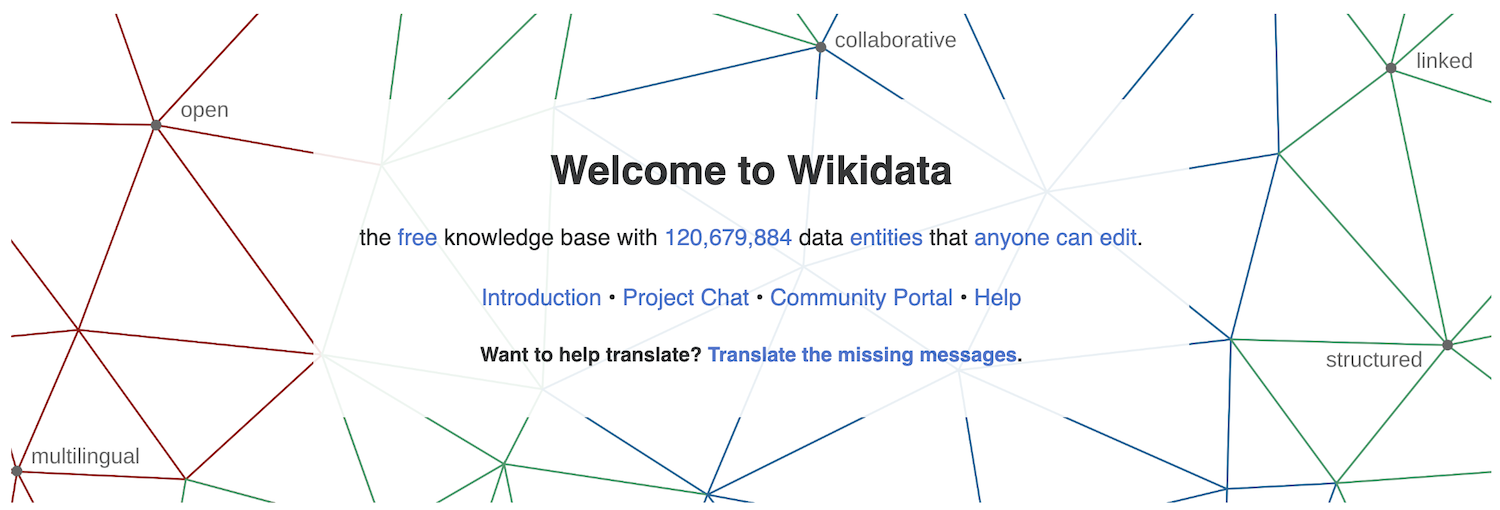
Wikidata home page says"Welcome to Wikidata the free knowledge base with 120,679,884 data entities that anyone can edit." superimposed over a background network graph connecting words like "open", "collaborative", "multilingual", and "structured"
  • "Openness" is a core principle
  • "Edit wars", contributors may not share our values
  • Easy to contribute to
  • Largest data set by far
  • Not intended for use as a GLAM authority
  • Good for proper nouns; what about subjects/forms?
13 / 18

Deciding on Wikidata Terms

For the "Creative Nonfiction" genre:

creative nonfiction (Q20669574)
genre of writing

Creative Nonfiction (Q65048560)
film by Dunham [2009]

Creative Nonfiction (Q5183530)
literary magazine

The first one is a genre and links to LCGFT. It also linked to the literary magazine's LCNAF until I fixed it.

For the "Magical Realism" genre:

magic realism (Q147516)
style of literary fiction and art

magic realism (Q24205155)
literary movement

Magical Realism (Q111598766)
1995 book by Zamora & Faris

Category:Magical realism (Q7210812)
Wikimedia category

magic realist fiction (Q102439494)
genre of creative works in any medium

First links to LCSH, last to LCGFT.

14 / 18

Ongoing Wikimedia Projects

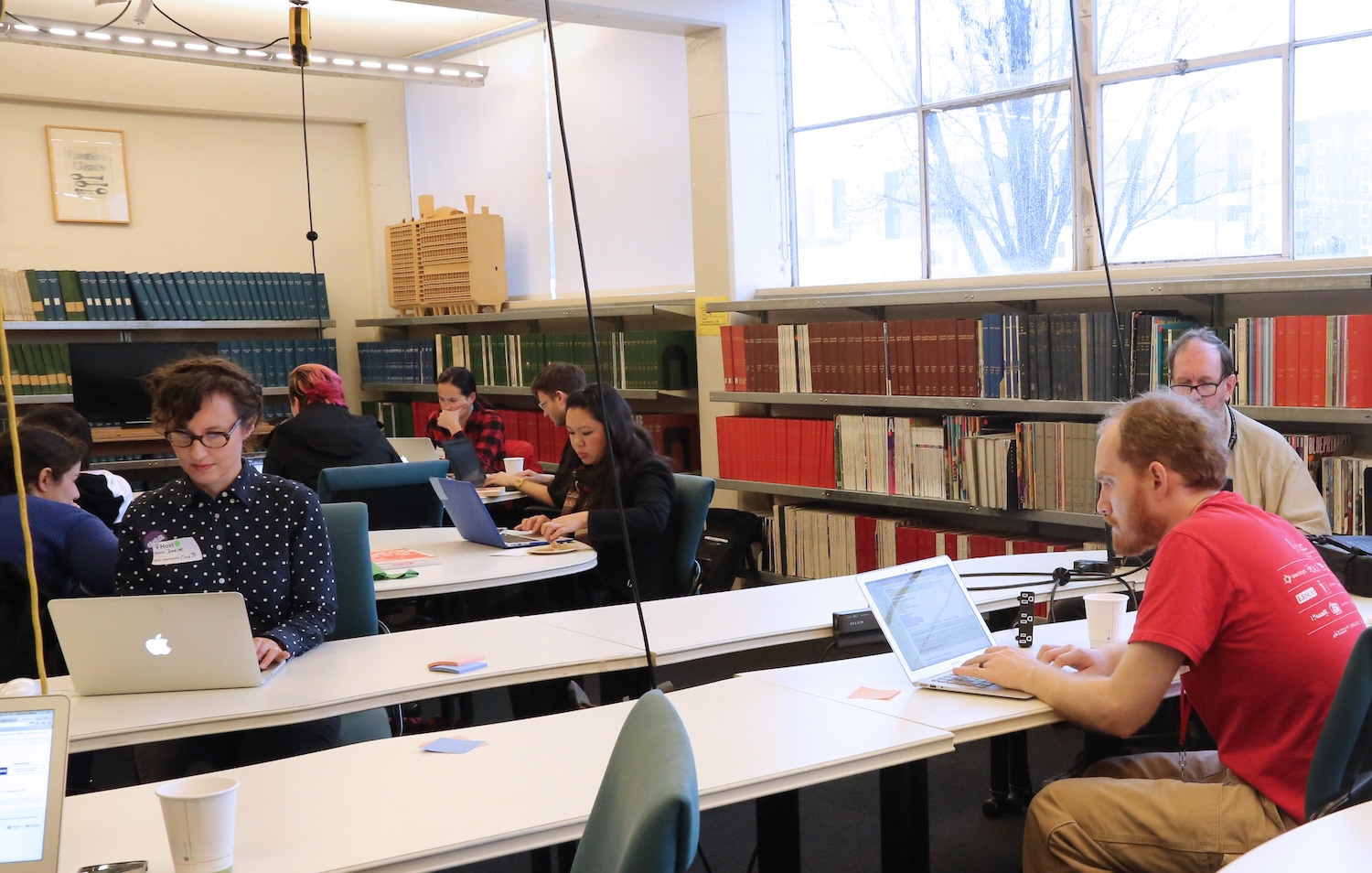
A group of people working on laptops in a library. Bound volumes with orange, green, and maroon spines are visible in the background. Two foreground figures are a dark-haired woman with a dotted shirt and a white man wearing a red Code4Lib shirt.
2016 Art+Feminism Edit-a-thon at CCA. I am front-right wearing a red Code4Lib shirt.

  • Art+Feminism Edit-a-thons
  • WikiProject LGBT/gender
  • WikiProject Personal Pronouns
  • WikiProject LD4 Wikidata Affinity Group
  • WikiProject PCC EMCO Community of Practice
    • EMCO Early Adopters 2nd cohort, register by March 13

15 / 18

Transvaluation of All (Metadata) Values

I ultimately redid all our URIs. I made several edits to Wikidata.


It is worth revisiting the ideological commitments of organizations that undergird our data and systems. Centralizing around terms controlled by any political entity comes with innate risk. In an age where American political parties seem to have lost the will and ability to materially improve the lives of ordinary people, we should expect symbolic struggles. The Gulf of Mexico is unlikely to be the final victim.


No institution is perfect. But some flaws are less likely to influence metadata quality. It is unreasonable to expect community-run efforts to fully substitute over a century of work on the Library of Congress vocabularies. Diversifying, instead of replacing, our authority sources is a more realistic approach.

16 / 18

Sad Ending

Our repository migration will never be completed.

Vanderbilt Agreement

President Howse announces an agreement with Vanderbilt University. CCA will conclude operations by the end of the 2026–27 academic year.

This important message was shared with the community on Tuesday, January 13, 2026.

Dear CCA Community,

I am writing to share an important update with you about the future of California College of the Arts: to support opportunities for our students to complete their education and to honor CCA’s significant role in the Bay Area’s creative ecosystem, we have entered into an agreement with Vanderbilt University.

17 / 18

References

Bailund, A., Dantchenko, L., Fox, V. B., Levy, M., Mackenzie, T., Schaefer, B., Shiraishi, N., Stewart, M. L., Tomaras, D., Dean, R., Ilik, V., & Phillips, A. (2025). PCC Task Group on Gender: Final Report. Program for Cooperative Cataloging. https://www.loc.gov/aba/pcc/taskgroup/TG-on-Gender-final-report.pdf
Bertolini, M. V., Bothmann, R. L., Rodríguez, E. E., Galeffi, A., & McGarry, D. (2017). Statement of International Cataloguing Principles (ICP). The International Federation of Library Associations and Institutions. https://www.ifla.org/wp-content/uploads/2019/05/assets/cataloguing/icp/icp_2016-en.pdf
Cataloging Ethics Steering Committee. (2021). Cataloging Code of Ethics. Cataloging Ethics Steering Committee. http://hdl.handle.net/11213/16716
Colbert, J. L. [ORCID: 0000-0001-5733-5168]. (2017). LGBTQ+ Controlled Vocabularies and Classification Schemes. http://hdl.handle.net/11213/16973
Jill E. Baron (Director). (2019). Change the Subject [Documentary; Digital]. Dartmouth College. https://www.library.dartmouth.edu/digital/digital-collections/change-the-subject
Library of Congress. (2025, March). Formulating Geographic Headings. https://www.loc.gov/aba/publications/FreeSHM/H0690.pdf
PCC Diversity, Equity, and Inclusion Advisory Committee, Baxmeyer, J., Billey, A., Cannan, J., Fox, V., Haugen, M., Ma, T., Perera, T., Tarango, A., & Whitacre, C. (2022, June 1). Statement regarding the replacement of “Illegal aliens” in LCSH [Letter]. https://listserv.loc.gov/cgi-bin/wa?A2=PCCLIST;3dea297e.2206
The Queer Metadata Collective, Adolpho, K., Bailund, A., Beck, E., Bradshaw, J., Butler, E., Bárcenas, B., Caelin, M., Carpenter, R., Day, A., Day, T., Dixon, D., Dover, A., Frizzell, S., Goodrich, G., Hendrickson, B. L., Keller, T., Misorski, C., Murphy, D., … Yragui, C. (2024). Best Practices for Queer Metadata. https://doi.org/10.5281/zenodo.12580530
Rundle, H. (2025, March 1). The gulf of America. https://www.hughrundle.net/the-gulf-of-america/
The Trans Metadata Collective, Burns, J., Cronquist, M., Huang, J., Murphy, D., Rawson, K. J., Schaefer, B., Simons, J., Watson, B. M., & Williams, A. (2025). Metadata Best Practices for Trans and Gender Diverse Resources. Zenodo. https://doi.org/10.5281/zenodo.15225199

18 / 18